

How to recover from burnout: the short version
Short answer: To recover from burnout, lower the load first, then rebuild the basics, then fix the cause. Cut, shrink or hand off what drains you most. Protect sleep, meals, movement and real time off every day. Then look at why it happened: too much work, too little control, or work that no longer fits. Recovery usually takes weeks to months, and there's no standard timeline. The free plan below helps you track it week by week.
What burnout is (and what it isn't)
The World Health Organization describes burnout as a result of chronic workplace stress that hasn't been successfully managed. It lists three signs:
Exhaustion: feeling drained, with energy that doesn't come back after a weekend.
Distance from your work: cynicism, dread or feeling numb about a job you used to care about.
Getting less done: feeling less effective, even when you try harder.
The WHO treats burnout as a work issue, not a medical condition. That matters, because rest alone won't fix it if the work stays the same. Exhaustion can also come from health problems, and burnout can overlap with depression or anxiety. If you've felt low most days for weeks, see a doctor.
The 3 phases of burnout recovery
Phase | Focus | What it looks like |
|---|---|---|
1. Lower the load | Stop the drain | Drop, delay or hand off tasks. Ask for help. Take leave if you can. |
2. Rebuild the basics | Refill | Regular sleep, real meals, light movement, time fully off work. |
3. Fix the cause | Prevent a repeat | Change workload, limits, role or pace so it doesn't build up again. |
The phases overlap. Most people start all three in small ways, but the order matters: rebuilding habits on top of the same overload rarely works.
Burnout recovery steps
Name what drains you most. List three things: a meeting, a person, a task, a commute. For each, decide: cut, shrink or hand off.
Tell one person. A manager, a doctor, a partner or a friend. Burnout grows in silence, and help is easier to accept once someone knows.
Protect four basics daily. Same wake time, real meals, 10 minutes of movement and a clear stop to work messages. Small and boring works best.
Do one thing you enjoy, every day. Not to be productive. Burnout flattens everything, and small doses of enjoyment help bring color back.
Set work limits you can keep. A finish time, no email in bed, one day fully off. These boundary scripts help with the wording.
Check your energy once a week. Rate it 1 to 10 on the same day each week. Look at the trend, not the bad days.
Free printable: burnout recovery plan
One page in three parts: what to cut, the daily basics with a Monday to Sunday tracker, and a six-week energy check. Print it or copy it into your notes.
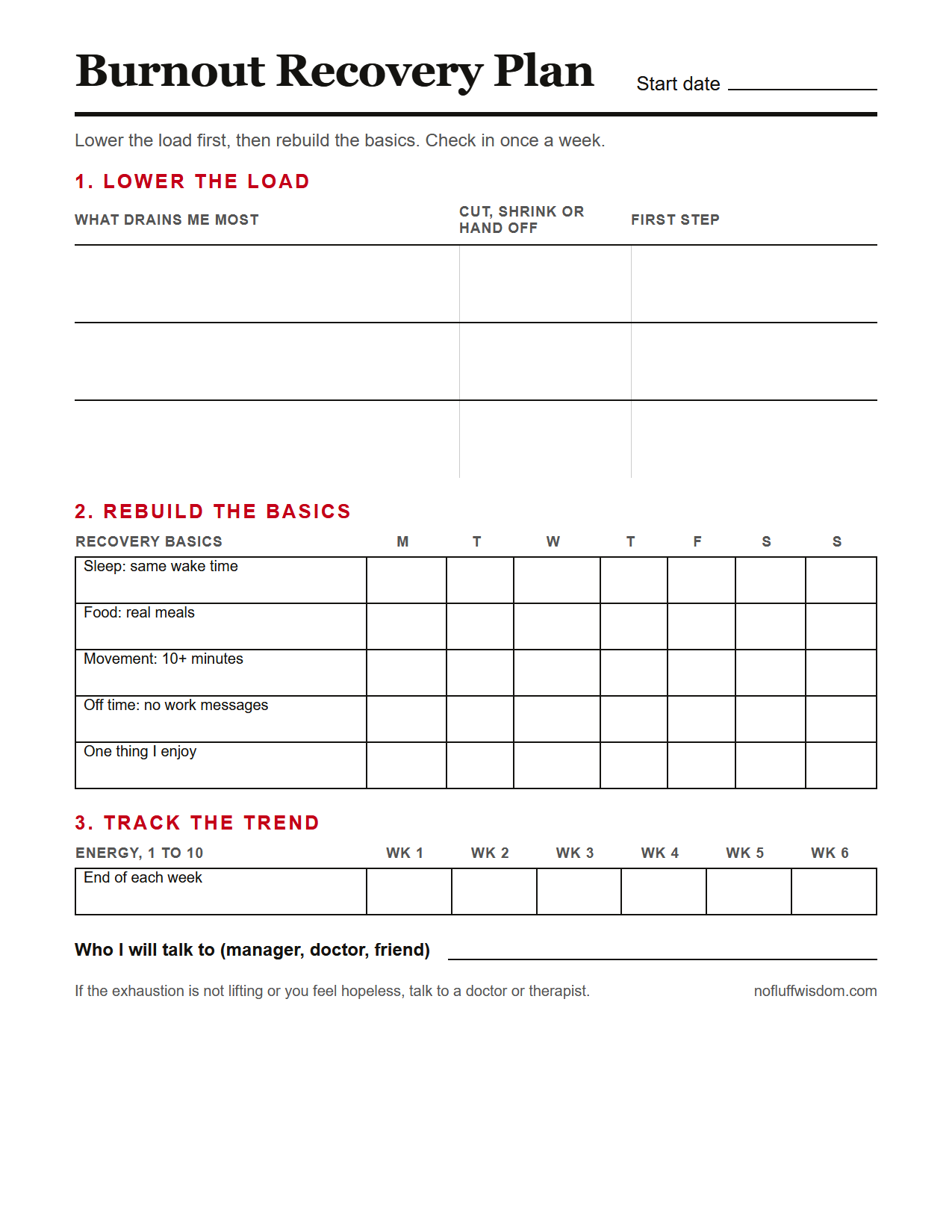
Free printable burnout recovery plan. Tap the button below to open it full size, then save or print.
Recovering from burnout while still working
Many people can't take time off. You can still recover, more slowly, if you shrink the load where you are.
Ask for a priority call. "I can't do all of these well. Which two matter most this month?"
Stop saying yes on reflex. If agreeing to everything got you here, learn how to stop people pleasing at work.
Take small breaks during the day. A walk at lunch, five minutes between meetings, a real lunch away from the screen.
Check your pace, not just your hours. Sometimes the problem is a speed you set years ago and never questioned. Ask: "Is this still my pace, or just the one I got used to surviving?"
Check the fit. If the work itself no longer matches what you care about, rest won't fix that. Note it on the plan and look at it once your energy is back.
Once your energy returns, rebuilding a few steady habits helps keep it. The Execution Bundle gives you both NoFluffWisdom books: 7 Steps to Change Your Life covers 7 core habits with a daily tracker and a Reset Protocol for low-energy days, and The 90-Day Discipline Blueprint adds one habit at a time over 12 guided weeks. 25% off with code 25off.
Questions people ask
How long does it take to recover from burnout?
There's no fixed timeline. It depends on how long it built up and how much of the cause you can change. Many people notice small improvements within weeks and need months for a full recovery.
What's the difference between being tired and burned out?
Tiredness gets better with rest. Burnout usually doesn't, and it comes with feeling detached from your work and less effective at it.
What are signs you're recovering from burnout?
Sleep helps again, small tasks feel possible, you notice things you enjoy and Sunday evenings feel less heavy. Expect some bad days along the way.
Can burnout make you sick?
Long-term stress can affect sleep, mood and physical health. If you have physical symptoms or feel hopeless, see a doctor.
When should I get professional help?
If exhaustion lasts for weeks despite rest, you feel hopeless, or daily life is hard to manage, talk to a doctor or therapist. If you have thoughts of harming yourself, contact a crisis line or emergency services right away.
Lower the load first
Don't start recovery by adding a long self-care routine. Start by taking one thing off the pile.
That's the bundle: 7 Steps to Change Your Life for the direction, The 90-Day Discipline Blueprint for the follow-through.
25% off with code 25off.
Print the recovery plan, write the three things that drain you most and cut or shrink one this week.
The NoFluffWisdom team